

Description
Item Description
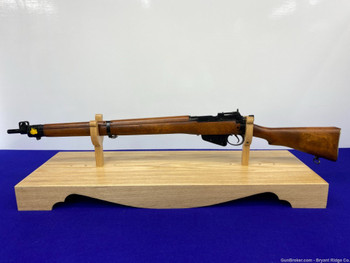
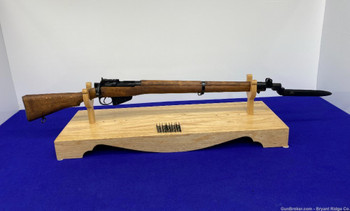
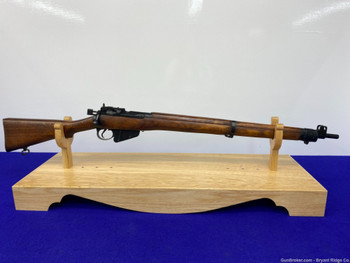
Bryant Ridge Co. is pleased to present this bolt-action rifle today for a penny-start auction; this is the Lee-Enfield No. 4 MK 2!
SPECIFICATIONS:
Manufacturer: Lee-Enfield
Model: No. 4 MK 2
Serial: 235939
Date of Manufacture: 1952
Caliber: .303 British
Finish: Blue
Barrel Length: 25"
Optics/Sights: Protected Blade Front with Adjustable Peep Rear
Stock/Grips: Smooth Walnut
Action: Bolt
Markings: Standard
Bryant Ridge's Analysis:
The last batch of British-made Enfields intended for general issue began production in the late 1940s and lasted until the mid 1950s. By 1955, the FN FAL in its many guises was coming into service throughout the West. The last of the breed, the No. 4 Mk. 2, evolved from the No. 1 Mk. III SMLE (often lovingly referred to as the “Smelly”) of World War I fame. These rifles are often referred to as “Irish Contract” rifles, but in reality, they were made for a number of end users, not just Ireland. Most of these entered the U.S. in the 1990s, the salad days of surplus, after the collapse of the Soviet Union, when international tensions were at low tide for almost a decade until the events of Sept. 11 reformatted the world once again.
Model: No. 4 MK 2
Serial: 235939
Date of Manufacture: 1952
Caliber: .303 British
Finish: Blue
Barrel Length: 25"
Optics/Sights: Protected Blade Front with Adjustable Peep Rear
Stock/Grips: Smooth Walnut
Action: Bolt
Markings: Standard
Bryant Ridge's Analysis:
The last batch of British-made Enfields intended for general issue began production in the late 1940s and lasted until the mid 1950s. By 1955, the FN FAL in its many guises was coming into service throughout the West. The last of the breed, the No. 4 Mk. 2, evolved from the No. 1 Mk. III SMLE (often lovingly referred to as the “Smelly”) of World War I fame. These rifles are often referred to as “Irish Contract” rifles, but in reality, they were made for a number of end users, not just Ireland. Most of these entered the U.S. in the 1990s, the salad days of surplus, after the collapse of the Soviet Union, when international tensions were at low tide for almost a decade until the events of Sept. 11 reformatted the world once again.
The Mk. 2 was a refinement of wartime No. 4. Instead of an L-type flip sight, with which most No. 4s were equipped during the war, the Mk. 2 had a much more precise micrometer installed. The large diameter battle sight was, however, retained and used for most practical purposes. The bolt mechanism remained basically unchanged from the wartime rifles. The trigger was slightly repositioned, and in many people’s opinion, the Mk. 2 trigger represents a noticeable improvement.
Essentially, the differences between the No. 4 and the very first No. 1s used in Africa against hostile tribes and the Boers are actually quite small. The core of the rifle, as far as the design goes, changed fundamentally little. The heart was the cock on closing bolt action. If you’ve never fired an Enfield, you’ll be in for a bit of a surprise the first time you do. The first thing you’ll likely notice is the speed of the bolt — it’s noticeably faster for people to operate than the Mauser action, which cocks on opening. This rather unique arrangement is what made the Enfield such a potentially rapid firing rifle in the right hands.
Return Policy:
We gladly offer a 3 day unfired inspection policy from the time that the firearm is delivered to your FFL. Refunds are available for all qualifying orders.
Return Policy:
We gladly offer a 3 day unfired inspection policy from the time that the firearm is delivered to your FFL. Refunds are available for all qualifying orders.



Shipping Details
Handgun Standard Shipping with Insurance $50.00
Long Gun Standard Shipping with Insurance $70.00
Any orders placed with magazines that are not compliant with your state, county, or city regulations will not ship with your order.
We strive to ship orders within the close of the following business day after payment and documentation is received.
Payment Details
We accept all forms of Payment including Personal Check, Business Check, PO Money Orders, Certified Check, Etc.
Please note we place a 7 business day hold on shipment, for all non-certified payments.
Payment MUST be received within 14 days.
Return Policy
We gladly offer a 3 day unfired inspection policy from the time that the firearm is delivered to your FFL. Refunds are available for all qualifying orders.
Additional Details
Our #1 priority is customer satisfaction. We want to build a lasting trust in the relationship with our customers, so that you will always look to us for all your firearms needs. If you have any issues with your transactions please contact us, and we will work with you to resolve any issues you may have. We greatly appreciate your trust in us and we look forward to fulfilling all your future firearm needs.
Bryant Ridge also reserves the right to cancel any sales that may occur while gunbroker.com is experiencing technical issues that affects the entire site or a complete site outage, within an hour of the auction ending.
We have an amazing inventory of classic and collector firearms that we are adding to Gunbroker daily. Stay up to date on all of our latest auction by adding us to your favorite sellers list.
About Us
From a small town hobby, to a leader in the investment and collector grade firearms industry. Bryant Ridge Firearms is here to offer the best in quality and customer service when you are looking to unload your collector grade firearm collection.